Trading, How TJR's Updated Day Trading Strategy Works
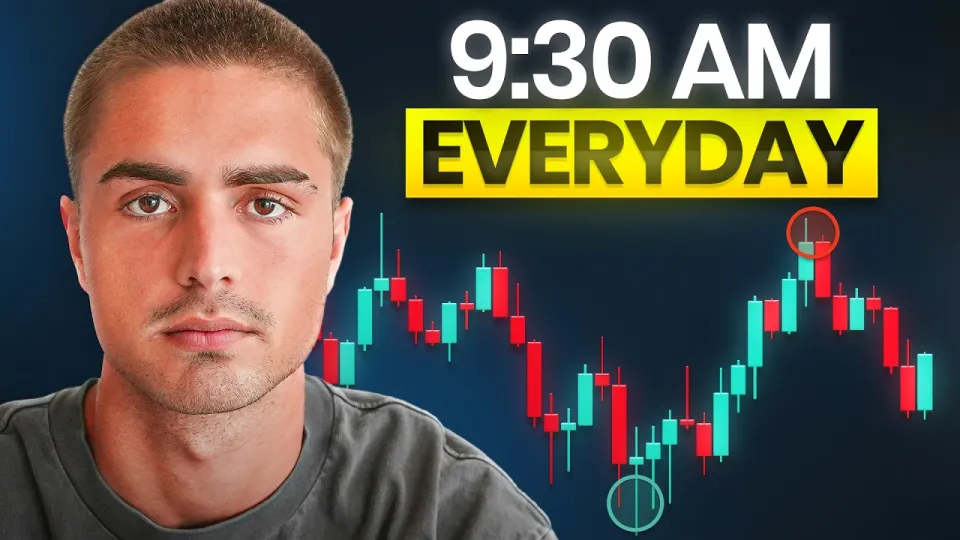
Video: My UPDATED Day Trading Strategy (2026)
Want articles like this for your own video to promote it on YouTube and Google? Order them through the Telegram bot @sat_sit_bot. It writes articles around your video, embeds the video and publishes them on popular niche websites (no ads). Free trial — 50 articles.
· based on the channel TJR
Key takeaways
- TJR rebuilt his day trading plan around fewer setups, cleaner levels and stricter confirmation before entry.
- The strategy runs on futures and forex charts, with funded-account prop firms (Alpha Futures, Lucid, Tradeify) as the common route to capital.
- Confirmation means a reaction at the level, not a blind touch — the most-asked question under the video.
- Risk control and rule-following are treated as the core edge; execution quality matters more than indicator count.
- The full system is distributed via TJR's Blueprint, with a separate indicator pack and a funded-account raffle.
Trading, in TJR's updated framework, is a rules-based process: mark the levels that matter, wait for the market to react to them, and only then take the entry with a fixed risk per trade. The strategy is built for day trading futures and forex, and the full system behind it is available through the TJR Blueprint, which lays out the exact rules, checklists and trade management steps. This article breaks down what the update actually changes, how the pieces fit together, and where traders usually go wrong.
What the updated trading strategy actually changes
The update is less about new indicators and more about removing decisions. TJR's revised plan narrows the playbook to a small number of repeatable setups, each tied to a specific chart context, so a trader can recognise the opportunity in seconds instead of debating it. The core logic stays familiar to anyone who has studied price action: identify a level that has already produced a reaction, wait for price to return to it, and act only on evidence that buyers or sellers are defending it again.
What changed is the discipline around that logic. Fewer instruments, fewer sessions, fewer trades. The strategy treats a no-trade day as a normal outcome rather than a failure, and it front-loads the work into preparation — marking levels before the session opens, defining invalidation in advance, and writing down the conditions under which the setup is void. That structure is what makes the approach teachable, and it is why the same framework can be applied to index futures in the morning and to a major forex pair later in the day.
The core setup: levels, reaction and confirmation
A setup only exists where price has already shown it cares about a price zone. TJR's approach starts with horizontal levels built from prior swing highs and lows, session extremes and obvious consolidation edges — the places where orders have been filled before. A level drawn on a chart is a hypothesis; the trade is the confirmation that the hypothesis still holds.
- Mark levels before the session, not during it. Levels drawn in real time tend to follow price rather than lead it.
- Wait for price to arrive at the level. No arrival, no trade.
- Look for a reaction: rejection wicks, a failed break, a shift in momentum at the zone.
- Take the entry only after that reaction, with the stop on the other side of the zone.
- Define the target from the next opposing level, not from a hoped-for number of points.
The confirmation question is the one that comes up most often under the video, and it is the right question to ask. A touch of a level is not a signal; the reaction is. Whether a trader uses a candle close beyond the zone, a rejection print or a lower-timeframe structure shift is a matter of consistency — the mistake is switching definitions trade to trade depending on how the position is doing.
Risk, position sizing and the maths of survival
Day trading is a negative-sum game for most participants once costs are included, and the strategy is designed around that reality rather than against it. Risk per trade is fixed as a percentage of account equity, not as a dollar figure that grows with confidence. Stops are placed where the idea is proven wrong, and if that distance is too wide for the allowed risk, the trade is skipped — the size does not get inflated to compensate.
Prop firm accounts make this concrete. A funded account from a firm such as Alpha Futures, Lucid Trading or Tradeify comes with a daily loss limit and a maximum drawdown threshold, and those rules sit above any individual setup. A strategy that risks 2% per trade can be perfectly sound on a personal account and still fail a funded evaluation in a bad week, which is why the plan specifies a hard daily stop and a maximum number of attempts per session. The journal matters here as well: recording entry reason, screenshot and outcome turns a vague feeling of progress into data that can be reviewed.
Execution, session timing and the tools involved
Execution quality separates traders using the same setup. TJR runs the strategy on futures and forex charts across the sessions where liquidity is deepest, and the indicator set referenced in the video is used to keep level-drawing and context reading consistent rather than to generate signals. Indicators that repaint or lag simply add noise to a process that already requires patience.
A practical execution checklist looks like this:
- Confirm the higher-timeframe context before dropping to an entry timeframe.
- Check the economic calendar for scheduled releases that can invalidate a level in seconds.
- Size the position from the stop distance, never from the desired profit.
- Take partials or trail only according to the written plan, not mid-trade emotion.
- Stop trading after the daily loss limit or the maximum trade count is hit.
Most of the frustration described by newer traders comes from skipping the first two steps. Entering without context and without checking the calendar produces the kind of loss that feels random and teaches nothing.
Common questions from traders following the strategy
The recurring doubts under TJR's breakdown fall into a few predictable buckets, and each has a practical answer. Traders ask whether confirmation means a candle close or just a reaction at the level — the honest answer is that either can work, but the definition has to be fixed in advance and applied to every trade so results are comparable. They ask whether the strategy is easier than it looks; it is mechanically simple and psychologically hard, which is the opposite of what most beginners expect.
Another frequent theme is the comparison with buy-and-hold crypto stories. A single lucky position in a volatile asset can outperform years of disciplined trading, but that outcome is not a repeatable process and cannot be sized or risk-managed in advance. Day trading offers a defined edge with defined risk per event; it does not offer lottery-like returns, and any plan that promises them should be treated as a warning sign. The realistic goal is a modest, repeatable expectancy executed consistently over hundreds of trades.
Finally, traders ask how long it takes. The answer depends on how quickly the rules become automatic, and the honest benchmark is not time but sample size — a few hundred logged trades with the same setup, the same risk and the same confirmation definition.
Useful links
- TJR Blueprint — the full trading system
- Indicators used daily
- Funded account raffle entry
- Alpha Futures funded accounts — 10% off
- Lucid Trading — 40% off
- Tradeify funded accounts — 30% off
- Tradezella trading journal
- HeroFX broker
Bottom line
The updated strategy is a discipline document as much as a trading plan: fewer setups, pre-marked levels, confirmation before entry, fixed risk and a hard stop on the day. Its value comes from repetition and record-keeping, not from any single indicator or secret level. Traders who want the complete ruleset, checklists and trade management steps can get it through the TJR Blueprint. The breakdown itself comes from the TJR channel, which is worth following for the reasoning behind each revision. Day trading remains risky, most participants lose money, and no plan removes that risk.
Source: My UPDATED Day Trading Strategy (2026) · Markdown version
Questions & answers
Does confirmation mean a candle close or just a reaction at the level?
Both definitions can work, but the choice has to be fixed before the trade and applied consistently. A candle close beyond the zone is slower and filters more noise; a reaction such as a rejection wick or a failed break gives earlier entries with more false positives. The mistake is changing the definition mid-trade to justify a position.
Is this day trading strategy suitable for a complete beginner?
The mechanics are simple — mark levels, wait for a reaction, enter with a defined stop — but the difficulty is psychological and procedural. Beginners should trade a small size or a demo account until they have logged a few hundred trades with identical rules. Without that sample, there is no way to tell whether the strategy or the execution is the problem.
How does risk management work with funded prop accounts?
Funded accounts from firms like Alpha Futures, Lucid Trading and Tradeify impose a daily loss limit and a maximum drawdown, and those rules override any individual setup. Risk is set as a fixed percentage per trade, with a hard daily stop and a cap on the number of attempts per session. A strategy that is sound on a personal account can still fail an evaluation if the daily limits are ignored.
Why do some traders make huge returns in crypto while day traders grind for smaller gains?
A concentrated position in a volatile asset can produce outsized returns, but that outcome depends on luck and timing and cannot be sized or risk-managed in advance. Day trading aims at a modest, repeatable expectancy executed over hundreds of trades. The two are different risk profiles, and comparing a single lucky result with a long-run process is misleading.